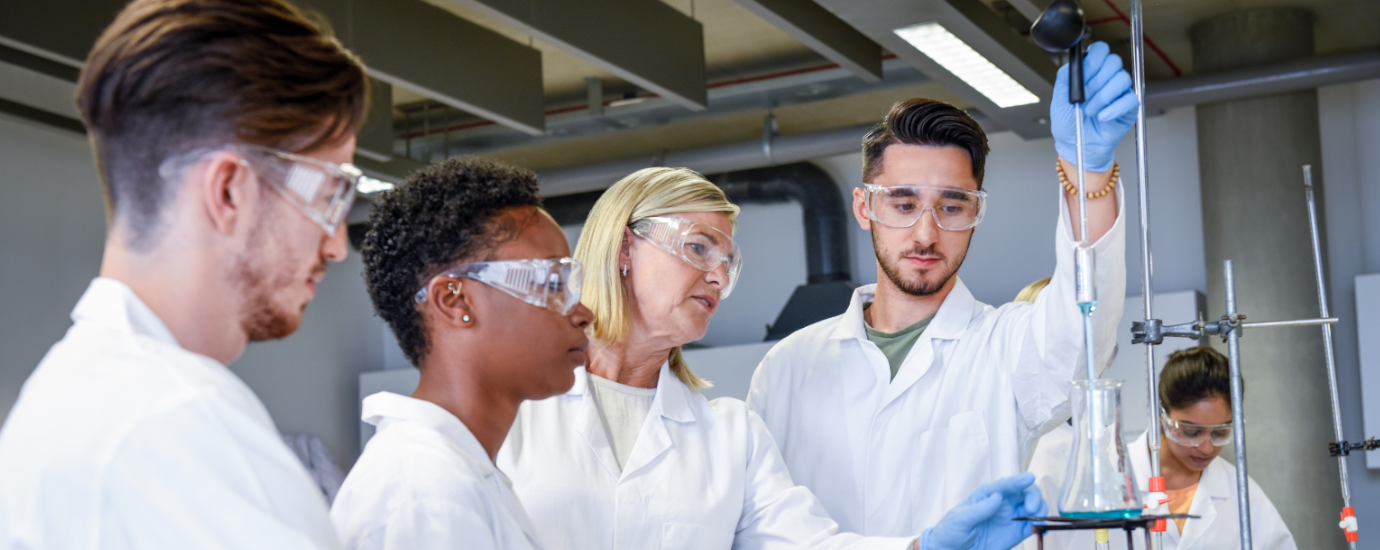
two women and two men working together with chemical labaratory tools.

Research

Between 2018 and 2024, the Research and Education Hub (REH) of ISC3 at Leuphana University carried out pioneering research on key topics in Sustainable Chemistry.

ISC3 research activities aim at mapping innovative solutions' potential & impact

Between 2018 and 2024, the Research and Education Hub (REH) of ISC3 at Leuphana University carried out pioneering research on key topics in Sustainable Chemistry. These studies addressed areas of high relevance for the transition towards a sustainable and circular chemical sector, focusing on technologies that hold significant promise for sustainable future.

The research produced new insights that contribute to the scientific and practical foundations of Sustainable Chemistry, supporting the implementation of the EU Green Deal and the Safe and Sustainable by Design (SSbD) framework. Results were disseminated through leading scientific journals, invited presentations at international conferences, and a range of ISC3 training and capacity-building activities. Through this work, the ISC3 REH has strengthened its role as a scientific partner in shaping a sustainable chemical transformation, fostering innovative approaches that combine chemical, environmental, and social responsibility.

to Leuphana

The Leuphana Campus showing in the middle of the treetops
The Leuphana University © Jannis Muser

Electrochemical Synthesis and Renewable Energy

Building on this mission, the REH focused on electrochemical synthesis as one of the most promising pathways toward sustainable chemical production. The research explored how the sustainability of these processes depends not only on the efficiency of the electrochemical reactions but crucially on the origin of the electricity that powers them. Since electrochemical synthesis requires considerable energy compared with traditional fossil-based methods, ensuring a renewable and low carbon energy supply is essential.To address this interconnection, the REH investigated the environmental and circular dimensions of renewable energy systems, particularly within photovoltaic technologies. This included studies such as “Closing the Loop in the German Silicon Solar Panel Industry” (Renewable and Sustainable Energy Reviews, 2021) and “Sustainability in Perovskite Solar Cells – Opportunities and Challenges.” These works examined how solar cell design, lifecycle management, and recycling strategies can strengthen the link between clean energy generation and sustainable chemical innovation. Together, they laid the groundwork for a more integrated understanding of how renewable electricity and circular design can drive the transition to sustainable chemical production.

GIZ

Metals

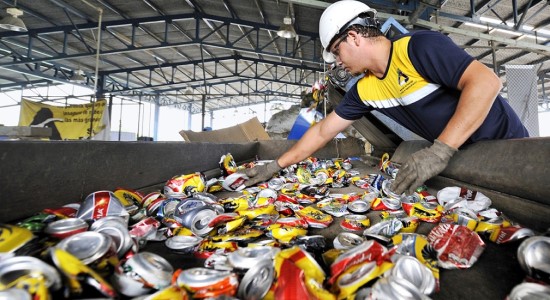
The work on electrochemical synthesis and renewable energy naturally led to a focus on metals as critical, non-renewable resources underpinning sustainable energy technologies. Solar panels, batteries, and electrochemical systems all rely on metals whose extraction and processing carry environmental, social, and economic implications. Recognising this dependency, REH research addressed metal resource sustainability, including aspects of availability, substitution, recycling, and circular economy integration.This line of research emphasised that achieving a truly sustainable energy transition requires closing material loops — ensuring that metals essential for renewable energy are sourced, used, and recovered responsibly. By connecting the chemistry of metals with system-level approaches to resource circularity and material efficiency, the REH contributes to building a resilient foundation for Sustainable Chemistry that complements and reinforces advancements in electrochemical technologies.

GIZ/Florian Kopp

Entropy Change as a Measure of Chemical Sustainability

Within its broader efforts to advance the foundations of Sustainable Chemistry, the REH explored the concept of entropy change as a potential measure for chemical sustainability. This work aimed to assess how thermodynamic principles could help evaluate the sustainability of chemical systems. Given the scientific depth and interdisciplinary nature of the topic, activities in this field were pursued mainly through expert dialogues, workshops, and collaborative exchanges. In this process, the REH played a coordinating and facilitating role, fostering discussion, connecting specialists, and supporting the collective exploration of methodological approaches. Rather than developing into a separate research stream, this initiative evolved as a shared learning process, generating valuable insights and reflections that informed several scientific meetings, conferences, and internal manuscripts. These contributions enriched the ongoing dialogue on how physical and thermodynamic principles can deepen our understanding of sustainability and circular economy concepts within chemistry.

GIZ

Chemoinformatics as a Versatile Tool in Green and Sustainable Chemistry: The Case of Ionic Liquids

Addressing the environmental safety of chemicals is a core element of Sustainable Chemistry. Within this framework, the REH’s research applied chemoinformatics to study and improve the biotic and abiotic degradation of ionic liquids—a class of compounds known for their wide range of applications but also for their complex environmental behaviour. The studies supported the Benign by Design (BbD) principle by developing predictive methods for assessing and improving biodegradability at the molecular design stage. Through the combination of data collection, curation, and quantitative structure–biodegradability relationship (QSBR) modelling, the REH elaborated systematic approaches to make BbD applicable to ionic liquids. The resulting tools enable the development of new compounds that can be fully mineralised in the environment or show low toxicity and ecotoxicity. This research led to a series of peer reviewed publications, including Lorenz et al., 2021; Amsel et al., 2022; 2023; 2024, and a manuscript in progress (Suk et al.), demonstrating the potential of computational modelling as a key method in Green Chemistry. These advances also contribute directly to the implementation of the Safe and Sustainable by Design (SSbD) framework by providing robust scientific approaches for anticipating and reducing environmental impacts during chemical development.

Viktoria Kurpas/Shutterstock