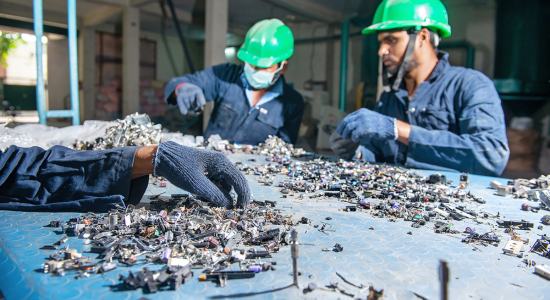
Electronic waste on a shop board with two workers in the background selecting parts for recycling and a hand of a third worker coming from the left side, also selecting parts.

Safe and Sustainable Processes and Consumer Goods

Why Consumer Electronics Must Change

Consumer electronics are central to modern life, but their production, use, and disposal place immense pressure on our planet. Rare metals are extracted at great environmental and social cost, energy-intensive manufacturing contributes to emissions, and e-waste accumulates faster than it can be safely processed. The industry faces a moral and practical imperative: to create technology that doesn’t compromise the future of people or the planet.

an icon showing a recycle sign in the middle of a ring structure

Redefining the Future of Electronics

The ISC3 aims to use Sustainable Chemistry principles that can transform consumer electronics by rethinking the materials, processes, and lifecycles behind every device. By designing safer, recyclable materials, reducing hazardous substances, and integrating circular economy principles, companies can minimise environmental impact while maintaining performance and affordability. Collaboration across manufacturers, suppliers, regulators, and researchers is essential, alongside the use of digital tools to track material flows and predict environmental and health risks. The result is electronics that last longer, can be safely recycled, and are produced with transparency and responsibility. This approach transforms the industry from a linear, extractive model into a circular, resilient ecosystem.

Sustainable Consumer Electronics: Challenges and Opportunities

ISC3 explores the role of materials in consumer electronics to provide strategic guidance, highlighting key challenges and opportunities. Building on this, ISC3 has initiated a stakeholder dialogue to discuss sustainable materials management across production, use, and disposal, and to identify potential areas for Sustainable Chemistry innovations.

Sustainable Chemistry offers the chance to drastically reduce the negative environmental impact of modern consumer electronics by reducing pollution, hazardous substances, and e-waste (SDG 12, 14, 15).

SDG 12
SDG 14
SDG 15