Palki Motors
The idea of building his own electric car first came to Mustafa Al Momin, founder and CEO of Palki Motors, during his first year of electrical engineering studies in 2009. While learning about electric motors in class, Mustafa also spent hours observing technicians repair motors in small workshops. One day, he realized that if he could build a motor with enough torque, he could create an electric car. At the time, the idea felt entirely original—he hadn’t even heard of Tesla yet.
Mustafa later moved to the United States to continue his studies at Montana State University, where he earned money by buying old cars, repairing them himself, and selling them. That hands-on experience gave him both confidence and a deeper understanding of vehicles, fuelling his ambition.
Although the dream stayed with him after returning to Bangladesh, Mustafa entered a difficult period of questioning and self-doubt. Years of hesitation followed. During a meditation course, however, a teacher said something that profoundly affected him:
“The purpose of being alive is to help people with one’s brain.”
“That pierced my heart”,
Mustafa recalls.“In a deep meditation session, I realized my purpose was to build electric cars that help people, help the planet, and help myself grow.”
That moment became the true beginning of Palki Motors. In March 2022, Mustafa sold his apartment and launched the company with just $4,000. What began as a vision in 2009 has now become Bangladesh’s first homegrown electric car company.The first major challenge for the company was a personal one for the founder: believing he could succeed with such an ambitious idea in a country like Bangladesh. Just months after selling his apartment to fund the company, Mustafa was left with only $300, placing him in a precarious financial situation. A local VC firm offered $250,000 for 25% equity, but Mustafa turned it down. Eventually, he found an investor who saved the company from bankruptcy.
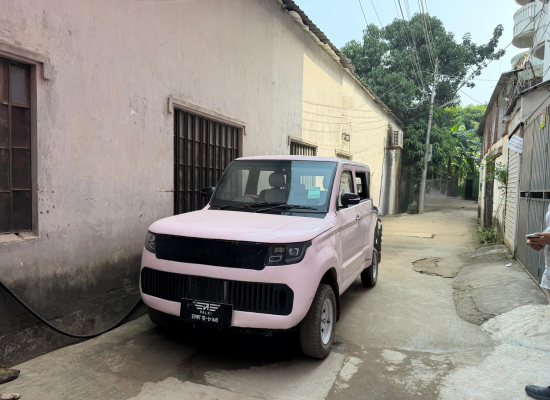
Later, when Palki Motors received 16 customer pre-orders but lacked the funds to build the cars, angel investor Tanveer Ali stepped in, providing $110,000 interest-free. This allowed the team to build 20 cars in 2023. In 2024, Palki Motors joined Accelerating Asia, and by January 2025, had raised $450,000. In May 2025, they reached a new milestone by winning the $1 million Zayed Sustainability Prize. Furthermore, Palki Motors pitched on “Shark Tank Bangladesh” in 2023, earning the recognition and approval of the judges and securing 100.000 $ from “Start-up Bangladesh”.
Beyond securing funding, building the right team and culture presented its own difficulties. Mustafa had to hire, train, and sometimes let go of people to shape a strong and mission-driven organization. Each challenge strengthened the foundation of Palki Motors.
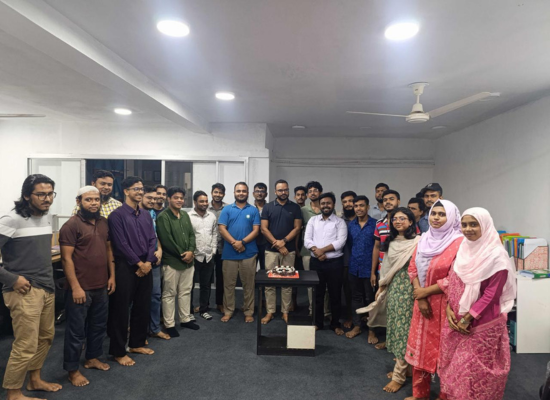
Mustafa Al Momin graduated in Electrical Engineering from Montana State University and began his career as a software and embedded systems engineer. He later worked across solar power plants, AI chatbots, edtech systems, and product management. Today, Palki Motors has 34 full-time team members, including mechanical and electrical engineers, production experts, supply chain specialists, HR, finance, and embedded systems engineers. The team designs, builds, tests, and iterates everything in-house.
“It’s a hands-on engineering culture where everyone learns both digital design and physical, practical manufacturing work”
, Mustafa explains. “That’s what allows Palki Motors to innovate quickly and manufacture affordably.”
When choosing a name for the company, Mustafa wanted something that proudly reflected Bangladesh. He considered historic vehicles from the region — Ratha and Palki. Palki felt perfect: it symbolized dignity, heritage, and movement. Traditionally, it carried gods, kings, and brides.
“Today, it carries a new dream — locally designed electric cars”
, he says. The logo also features a Bengali letter, representing the country’s language and identity. Mustafa hopes that when Palki becomes global, people everywhere will recognize that Bengali character. Driving change, one kilometer at a time
Dhaka, the capital of Bangladesh and Mustafa’s home city, suffers from severe air pollution — its atmospheric particulate matter (PM) concentration of PM2.5 is currently 11.5 times higher than the World Health Organization’s annual guideline value. A significant portion of that pollution comes from vehicular emissions.This deeply troubled Mustafa.He was also moved by the difficult lives of commercial drivers: working 12–14 hours a day yet remaining poor due to high lease fees. Most could not afford to own a car — let alone an electric one. Mustafa wanted to change both realities: reduce pollution and lift drivers out of poverty through vehicle ownership.
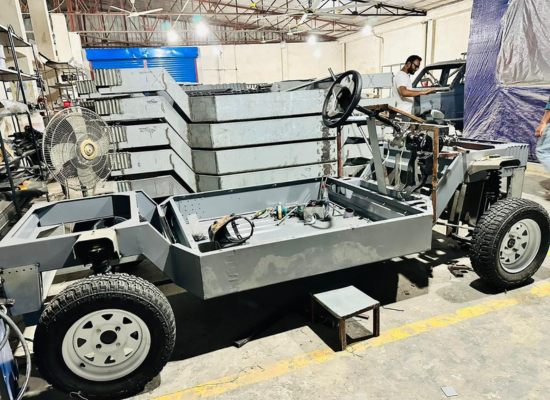
The innovation behind Palki Motors goes far beyond building electric cars; it lies in how the manufacturing is reimagined. On one hand, the company relies on low-capital metal forming techniques. Instead of expensive stamping presses, Palki uses bending and laser cutting to build the car body and chassis. This drastically lowers machinery costs and makes small-scale manufacturing feasible in Global South countries.
On the other hand, the team aims to implement an Autonomous Micro-Factory in the future — a modular, AI-driven manufacturing system where robots form metal, weld the chassis, paint, and assemble vehicles.
“We don’t just make electric vehicles. We design a sustainable system around them”
, explains Mustafa. This combination of affordability, automation, and local manufacturing is at the heart of Palki Motors’ innovation.Traditional EV manufacturing generates significant waste, and many first-world vehicles eventually end up dumped in Global South countries. Meanwhile, recycling and waste management remain extremely challenging in Bangladesh. Palki Motors addresses this through a circular design philosophy:The approach includes the use of minimal scrap metal, modular chassis and reusable body panels. Lithium Iron Phosphate (LFP) batteries that are used, are safer, more stable, and more environmentally friendly than alternatives. Additionally, they can be repurposed for 3-wheelers after their first life and old car bodies are returned to Palki for rebuilding. automated paint systems with treatment plants are implemented to reduce chemical waste.
Beyond the environmental benefits, Palki’s cost-efficient production model enables the affordability needed for commercial drivers to finally own their vehicles — improving their income, independence, and overall quality of life. This innovation not only reduces Bangladesh’s carbon footprint, but also paves the way for a more equitable and sustainable future, both locally and eventually globally.
Next up at Palki Motors
The current focus is dedicated to quality, regulatory approval, and building trust with customers through flawless cars. The long-term goal is to reach 17,000 cars per year. This includes building the initial automated micro-factory and exporting it to Africa and South Asia.
With their innovative approach, Palki Motors, who joined the ISC3 Global Start-up Service as one of the Innovation Challenge finalists in Sustainable Chemistry and Climate Change in July 2025, actively contributes to SDG13 (Climate Action), SDG7 (Affordable and Clean Energy), SDG3 (Good Health and Well-being), SDG8 (Decent Work and Economic Growth), SDG9 (Industry, Innovation, Infrastructure), SDG11 (Sustainable Cities and Communities), SDG12 (Responsible Consumption and Production).