Problems are fertilizers for new solutions
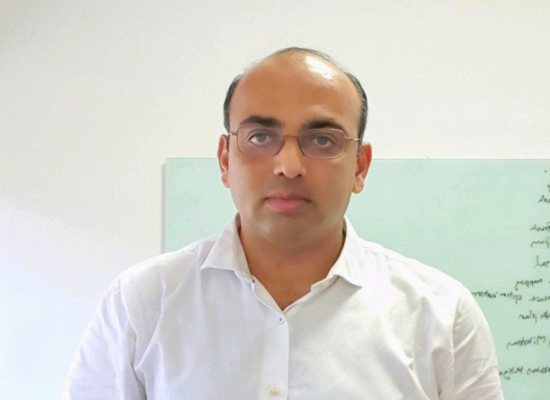
Environalgae was created as the result of a personal career decision. Dr. Ninad Gujarathi (now Founder and Director) found himself at a crossroads in his professional journey: whether to remain in a successful corporate role or step into entrepreneurship with the potential for greater impact.
A chemical engineer by qualification, Ninad began his career as a technologist in the field of sustainable energy and low-carbon solutions with one of India’s pioneering biofuels technology companies. In these early roles, he was exposed to path-breaking work in biofuels while building his expertise as both a chemical engineer and a leadership professional over more than 12 years.
His career later progressed to the role of Business Head at a multinational company in India in 2018. Here, the experience and expertise he had accumulated over the years proved crucial at a critical moment. A multi-million-dollar project was facing an existential challenge due to two key constraints: working capital limitations and the need to replace an expensive, carbon-intensive thermal process for wastewater treatment. At the same time, the parent company had made it clear that it would not support any solution that risked its sustainability targets through high-emission processes on site.
Ninad’s technical instincts took over. He initiated a fast-track R&D programme, bringing in fresh engineering graduates to work on the wastewater challenge while also drawing on his prior experience in microalgae systems. In parallel, he worked with the core R&D team to address the working capital constraints. Over the next eight months, both streams of work delivered results. The working capital challenge was resolved through operational improvements in the core plant, freeing up more than $20 million. At the same time, the microalgae team developed and successfully implemented a sustainable process for treating the previously unmanageable wastewater stream at scale. The business achieved an operating profit increase of over 120%, while the microalgae R&D team received a pan-organisation innovation award across 38 countries.
This experience reinforced a realisation he had been developing over time: many environmental challenges are highly local and specific, and are often not well served by large corporations and their global, standardised solutions. Start-ups, in contrast, are better positioned to address such challenges through more flexible, application-specific approaches tailored to individual customers.
This insight ultimately led Ninad to take the decision to found Environalgae.
“That is when I realised that my heart lies in sustainability”,
he explains. “I decided to step away from my corporate role to focus on developing and delivering microalgae-based solutions for industry and communities.”
He gradually transitioned out of his Business Head responsibilities while beginning to engage with industry stakeholders to explore opportunities for what would become Environalgae.
Nature´s answer to water pollution
“Pollution of air and water is a significant challenge”,
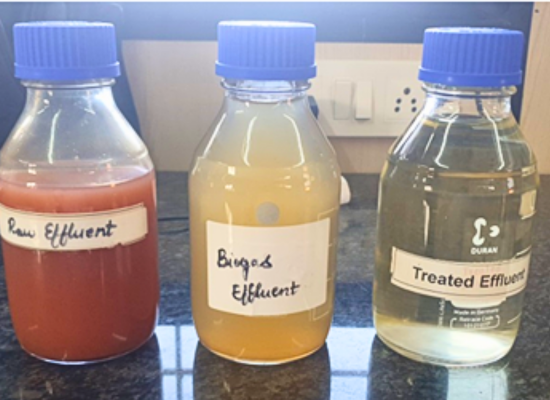
states Ninad. Conventional wastewater treatment processes typically use fossil energy to convert carbon, nitrogen, and other compounds present in wastewater into CO₂, CH₄, bio-sludge, or precipitated salts, while rendering the treated water suitable for environmental discharge or reuse. However, these by-products and off-gases are either greenhouse gases themselves or contribute to greenhouse gas emissions. As a result, most conventional wastewater treatment processes carry a relatively high carbon footprint. Environalgae develops, designs, engineers, executes, and commissions microalgae-based wastewater treatment plants. The company then converts the co-product, microalgae biomass generated in the treatment process, into commercial products with high-impact applications in agriculture, animal and aquaculture feed. The core innovation lies in designing customised process technology tailored to the specific nature of each wastewater stream. While each project requires a significant degree of bioprocess and engineering adaptation, the underlying platform remains the same: microalgae.
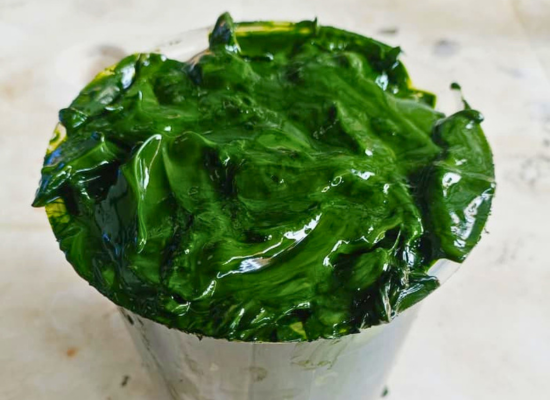
Microalgae are among nature’s fastest-growing photosynthetic organisms. They contribute to sustainability through their ability to capture carbon using sunlight and produce valuable biomolecules, including lipids, proteins, and carbohydrates. In wastewater, the pollutants, primarily carbon, nitrogen, and other nutrients, serve as a growth medium. Microalgae take up these compounds and use them to grow, effectively treating the wastewater while generating biomass. Through photosynthesis, they also produce oxygen as a by-product, making the process inherently “clean-tech,” while the treated water becomes suitable for recycling and reuse. One acre of microalgae pond produces circa 84 metric tons of oxygen per year, several times higher than many terrestrial forest systems on an equivalent land-area basis. Because sunlight is the primary energy source, the overall carbon footprint of the process is relatively lower. In addition, converting these compounds into microalgae biomass reduces the release of greenhouse gases compared to conventional treatment pathways by approximately 45% (based on external Life Cycle Analysis).
Microalgae are also among nature’s most efficient biological producers. Their biochemical composition, including amino acids, polysaccharides, vitamins, antioxidants, pigments, carotenoids, phenolics, and other trace biomolecules, makes them a valuable feedstock for agriculture and animal and aquaculture nutrition.
“We are convinced that microalgae-based wastewater treatment can be a sustainable, circular, clean-tech, and profitable solution for managing wastewater pollution-related issues faced by companies and communities across the globe”,
says Ninad. The remaining challenge, he notes, lies in identifying and building the right technology partnerships to absorb and utilize the surplus microalgal biomass generated.
Next up at Environalgae
The company´s primary focus is the execution of large-scale microalgae-based wastewater treatment plant. Environalgae is also planning to invest more of their time and resources on valorisation of the microalgal biomass for producing high-value biochemicals. As the number of product combinations that can be explored in the agricultural inputs and animal feed sectors is massive, the start-up is now in discussions with some of the top academic and research institutes in India to jointly explore these product innovation options. Finally, the potential of this technology for cleaning wastewater and hence delivering alternate and regenerative fresh water reserves in some of the world’s most parched geographies is another area of focus in the near-term future.
With their innovative approach, Environalgae, who joined the ISC3 Global Start-up Service in August 2025, actively contributes to SDG2 (Zero Hunger), SDG3 (Good Health and Well-being), SDG6 (Clean Water and Sanitation), SDG7 (Affordable and Clean Energy), SDG11 (Sustainable Cities & Communities), SDG12 (Responsible Consumption and Production), SDG13 (Climate Action).